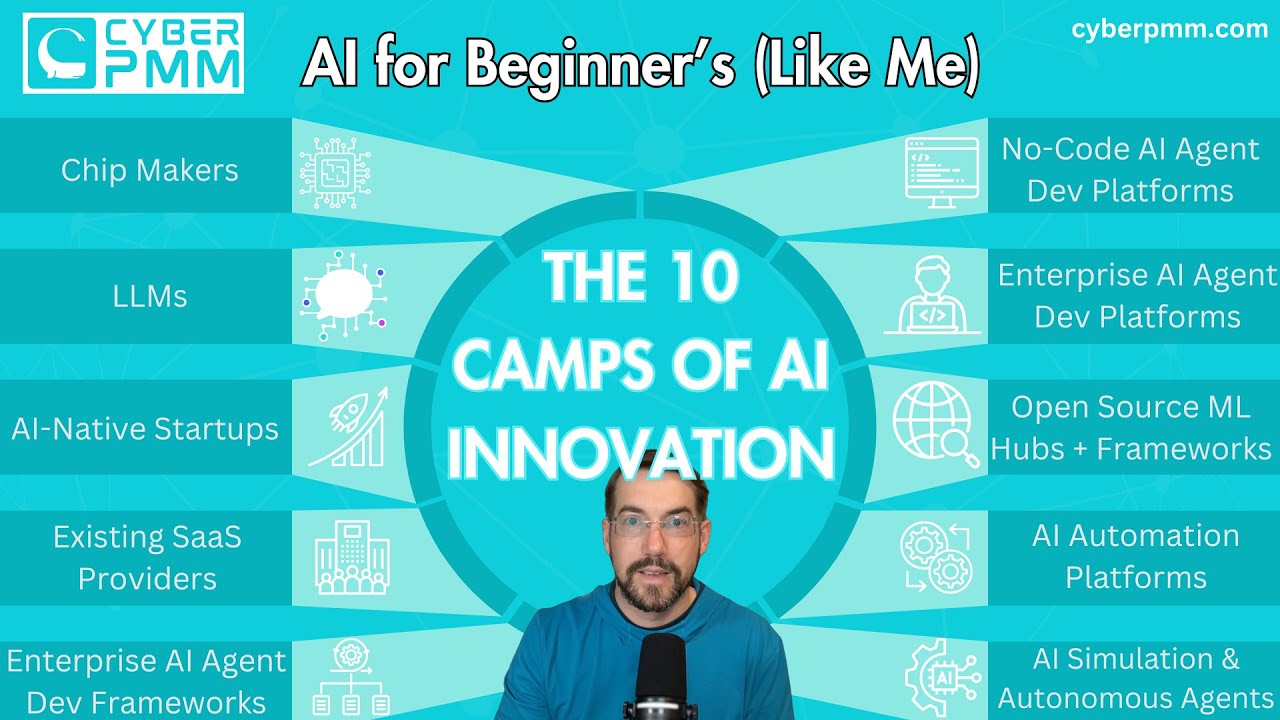
The 10 Camps of AI Innovation
A comprehensive breakdown of the different approaches to AI innovation in cybersecurity and how to navigate this complex landscape.
AI Innovation for Beginner's (Like Me)
As I discussed in my last post, my LinkedIn feed is a firehose of AI hype—much of it noise, some of it genuinely game-changing. The pace is overwhelming, but one thing is clear: we either adapt to AI or risk irrelevance in digital work.
Also if you are more interested in using AI tools ASAP, my advice is to start with a clear objective—what do you want to accomplish? For example: I want to build an app that tracks tech industry M&A. Use YouTube to do research and then test what you find. I was amazed at how easy it was to test AI-powered app builders like Bolt.new and Bubble.ai, and also tested automation tools like Relevance AI and Zapier for creating AI agents. It's not rocket science—just define your goals and experiment.
In my next post, I'll dig into how AI agents can automate product marketing—because if AI can tackle rocket science, it can certainly handle PMM tasks. Stay tuned for that.
[Watch on YouTube](https://www.youtube.com/watch?v=n-B88AzsTAM)
Methodology
Here's the result. A list that highlights the 10 major AI camps and their roles in shaping the AI landscape.
Pro tip: For every vendor you aren't familiar with below, simply search for their brand on LinkedIn and click Follow. Then just observe their releases and community engagement. I have been amazed at what they are up to.
The Ten Camps of AI Innovation
1. Chip Makers: The Foundation
I know this one is a no-brainer, but chip design and manufacturing forms the backbone of AI innovation. Companies like NVIDIA, AMD, and TSMC produce GPUs and processors that power AI workloads, needed for training large language models (LLMs) and running complex AI systems.
Want to read the full article?
Sign up for free to read the complete article and access all Cyber PMM content.